
Guide
Griddles, Planchas & Salamanders Explained
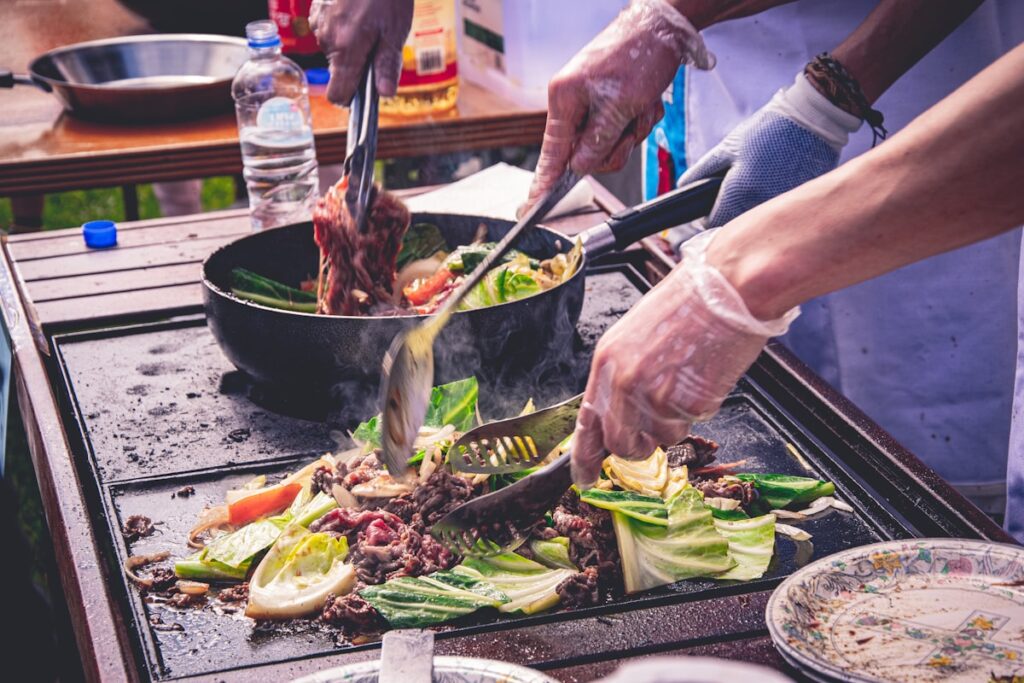
Three pieces of cooking equipment turn up again and again on commercial menus, and operators often confuse them: the griddle (or plancha), the salamander, and the char-grill. They look like cousins but each does a distinct job, and choosing the right one — or the right combination — expands your menu fast while keeping the line efficient. Here’s what each does, how they differ, and how to pick for a Singapore kitchen.
Griddle / plancha
A griddle, or plancha, is a flat heated metal surface you cook directly on. It gives broad, even, high-contact heat — ideal for eggs, pancakes, smash burgers, seafood, onions, teppanyaki and anything that benefits from full contact with a hot plate and a good sear without flame. Because the surface is solid, nothing falls through and you get even browning across the whole footprint.
Griddle surfaces come in two main types. Chrome tops are easy to clean and energy-efficient, with a polished plated surface. Steel tops build a seasoned, flavourful non-stick layer over time but need a seasoning-and-oiling routine to perform and resist rust. The choice shapes both your menu and your maintenance — for the full surface-care comparison see our griddle seasoning and cleaning guide.
Salamander
A salamander is an overhead grill — intense heat from above — used mostly for finishing rather than primary cooking. It’s the tool for glazing, browning, caramelising tops, melting and blistering cheese, toasting, and crisping the surface of a dish just before it goes out. Because it works from above and sits at counter or wall height, it finishes plates fast without tying up oven space during service.
Salamanders are prized for speed and flexibility on a busy line: slide a gratin under for a quick browned top, melt cheese on a burger, finish a fish. They’re a finishing station, not a workhorse for cooking food through, and they pair naturally with a range or griddle that does the primary cooking.
Char-grill
A char-grill cooks over open heat through bars or grates, giving the sear marks and smoky char that define grilled food. It’s the tool for steaks, satay, chops, vegetables and anything where visible grill marks and a smoky flavour are the point. Fat dripping onto the heat source creates flare-up and smoke that flavours the food — which is exactly why a char-grill demands strong extraction to handle the grease-laden smoke it produces.
That extraction requirement is a real planning factor in Singapore kitchens, where ventilation capacity is often limited and grease management matters for both fire safety and licensing. Don’t add a char-grill without confirming your hood can cope.
How to choose between them
Each tool maps to a different cooking style, so match equipment to your menu:
- Griddle/plancha for delicate, high-contact cooking — breakfast service, smash burgers, seafood, teppanyaki — and anything that needs even browning without flame.
- Salamander for finishing — glazing, browning, melting, toasting — fast, without using oven space.
- Char-grill for sear marks and smoky flavour on steaks, satay and vegetables, where you have the extraction to support it.
They’re complementary, not competing. Many kitchens run a griddle and a char-grill side by side for different items, with a salamander above for finishing. Pick the combination your menu actually needs rather than buying all three by default.
Singapore considerations: power, space and extraction
Before you specify, run through the practicalities. Extraction is the big one: char-grills throw off heavy, greasy smoke and need serious hood capacity, while griddles and salamanders produce less but still need ventilation for heat and fumes. Confirm your hood and exhaust can handle the equipment you’re adding, and factor SCDF fire-safety and grease management into the plan.
Then consider fuel and power. Gas versions deliver strong heat where a sized supply and flue exist; electric versions install more simply and suit sites without gas, though larger units may need three-phase. In an air-conditioned kitchen, gas equipment also adds heat your cooling must remove. Finally, plan bench space and clearances — a salamander mounts overhead or on a stand to save floor space, while griddles and char-grills occupy prime line real estate that has to be earned by menu volume.
Buying advice
Size each piece to your peak output and choose build quality that survives heavy daily use and our humidity — stainless construction and serviceable parts pay off over the equipment’s life. Decide griddle surface (chrome vs steel) by your menu and maintenance appetite, and don’t add a char-grill until your extraction is confirmed. Buy from a supplier who can install and service locally, and plan delivery and install lead times into your fit-out. For help matching cooking surfaces to your menu and ventilation, request a quote to add cooking surfaces.
FAQ
Griddle or char-grill? Griddle for delicate, high-contact cooking like eggs, seafood and smash burgers; char-grill for sear marks and smoke on steaks, satay and vegetables. Many lines run both for different items.
What is a salamander actually for? Finishing — glazing, browning, melting cheese, toasting and crisping tops — with intense overhead heat, fast, without tying up oven space. It’s not for cooking food through.
Is a plancha the same as a griddle? Effectively yes — both are flat heated cooking surfaces. “Plancha” is commonly used for the flat-top style; the cooking principle of even, high-contact heat is the same.
Do these need special extraction? Char-grills need strong extraction for grease-laden smoke and are the main ventilation concern. Griddles and salamanders produce less but still need a hood for heat and fumes. Confirm your extraction before adding any of them.