
Guide
Rotisserie Kits & Accessories
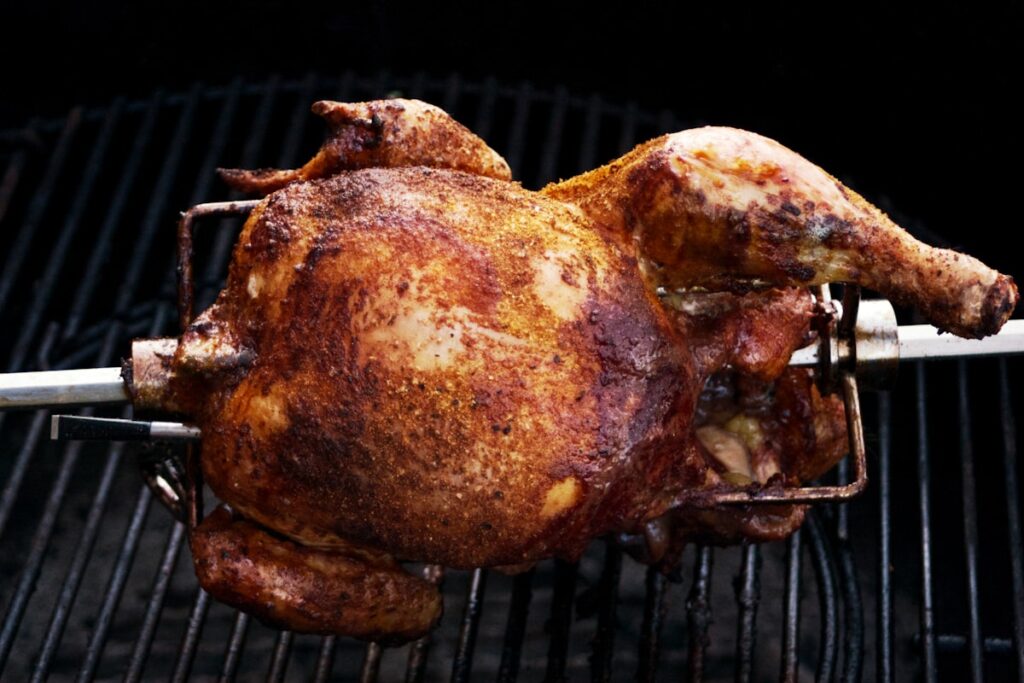
A rotisserie adds self-basting, evenly cooked roasts to your grill — whole chickens, pork joints and lamb that turn slowly over indirect heat until the skin crisps and the meat stays juicy. But a spit is only as good as the kit driving it. A motor that’s too weak, forks that won’t grip, or a rod that doesn’t fit your grill will turn a promising cook into a struggle. Here’s what to look for when you’re choosing a rotisserie kit and the accessories that make it work.
Motor: torque and capacity matter
The motor is the heart of the kit, and the figure that matters is the load it can turn smoothly. Match the motor’s rated capacity to the heaviest joint you’ll cook — a small motor sized for a single chicken will stall, strain and overheat under a heavy leg of lamb or a pair of birds. Look for a motor rated comfortably above your typical load so it isn’t working at its limit, which also extends its life. Heat tolerance matters too: the motor sits beside a hot grill, so a unit built to shrug off that heat lasts longer than a cheap one that cooks itself.
Mains-powered motors give consistent torque for regular use; battery-powered units offer portability but check the run time covers a long cook. Either way, an unbalanced or overloaded spit is what kills motors, so capacity headroom is the best insurance.
Spit rod: shape, length and fit
The spit rod must span your grill correctly and clear the lid as it turns. Measure your grill before buying — both the width the rod needs to span and the height clearance for a large joint to rotate without hitting the dome. Rod shape matters for grip: square or hexagonal rods stop a heavy roast from slipping and spinning loose on the rod, whereas a round rod lets the meat rotate independently and cook unevenly. A sturdier, thicker rod resists bending under a heavy load. Stainless steel is the sensible material in Singapore’s humidity — it shrugs off the rust that plagues cheaper plated rods.
Forks and balance
The forks are what actually hold the meat and transmit the turning force, so they need to bite into the densest part of the joint and lock down tight. Look for substantial, sharp-pronged forks with a solid clamping mechanism — flimsy forks slip, the meat lolls, and the cook turns uneven. Good forks plus careful centring are what give you smooth, balanced rotation. For heavy or awkwardly shaped joints, a counterweight that clamps to the rod offsets the imbalance, smooths the turn and spares the motor; it’s a worthwhile accessory if you cook large or irregular cuts often.
Fit your grill
A rotisserie kit has to match your specific grill. Many kamados, kettles and gas grills have dedicated rotisserie rings or brackets, and some gas models include a rear infrared burner designed expressly for spit cooking. Before buying, confirm:
- The brand or model has a compatible kit, or a universal kit fits your grill’s dimensions.
- There’s a mounting point or bracket for the motor.
- The rod length and lid clearance suit your grill.
- You have a way to run indirect heat — a rear burner, or room to bank charcoal to the sides.
For how to actually cook on the spit once it’s fitted, see our rotisserie cooking guide.
Useful accessories
- Drip tray. Sits under the meat to catch rendering fat, prevent flare-ups and collect juices for gravy. Almost essential.
- Counterweight. Balances heavy or uneven loads and protects the motor.
- Rotisserie basket or tumble basket. Clamps onto the rod to turn wings, vegetables, potatoes or cubed meat that won’t skewer.
- Multi-prong skewers (flying saucers). Hold several smaller items — sausages, quail, kebabs — securely along the rod.
- Spare forks and a storage sleeve. Forks get lost and rods need protecting from knocks and moisture between cooks.
Buying advice for Singapore
In a hot, humid climate, material quality earns its keep. Stainless steel rods and forks resist the rust that ruins cheaper plated kit left in a damp store cupboard, so dry and store the components after each cook. Buy the kit to suit your heaviest realistic load rather than your average one — the extra motor and rod capacity costs little and saves you from a stalled, straining cook later. If you’re matching a kit to a specific grill or buying for a catering setup that runs spits regularly, it’s worth confirming compatibility before you order.
FAQ
What’s best on a rotisserie? Whole chickens, pork and lamb self-baste beautifully as they turn — fatty, evenly shaped joints are the ideal candidates, while baskets handle wings, vegetables and cubed meat.
How big a motor do I need? One rated comfortably above your heaviest joint. Headroom keeps rotation smooth, stops the motor straining and extends its life.
Will any kit fit my grill? No — measure your grill’s span and lid clearance and check for a compatible kit or bracket before buying. Many kamados, kettles and gas grills have model-specific rings.
Do I really need a counterweight? For heavy or oddly shaped joints, yes — it balances the load and protects the motor. For a well-centred chicken you can usually do without.
Browse our grills & accessories, or request a quote.