
Guide
Kamado vs Offset vs Pellet: Which Smoker Is Right for You?
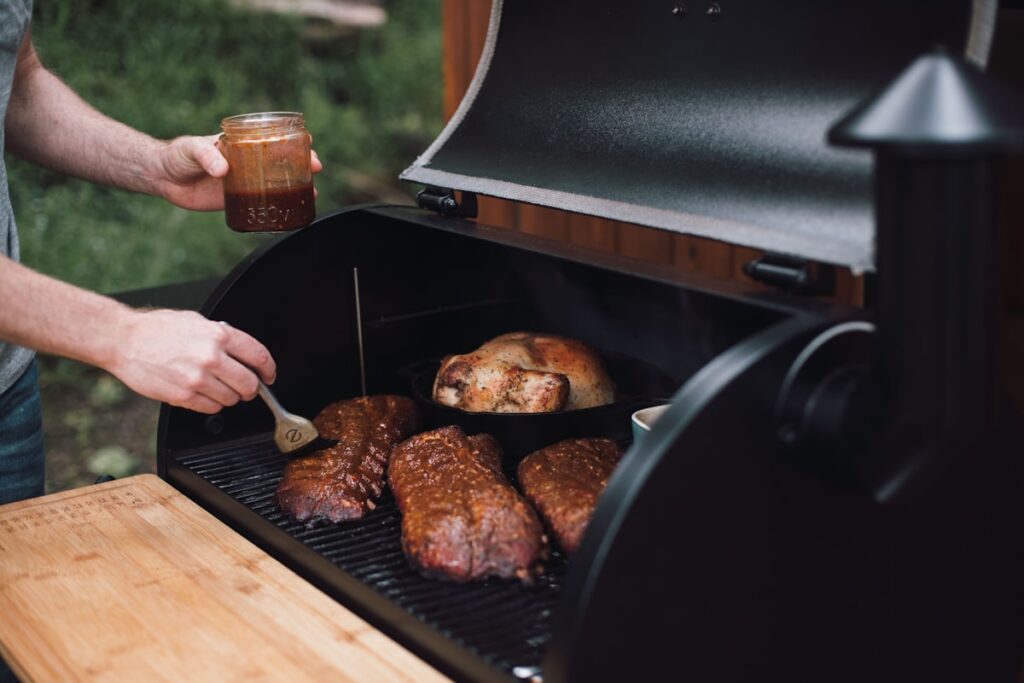
Kamado, offset and pellet smokers are three of the most popular ways to make great barbecue, and each has a distinct personality. One is a versatile do-everything ceramic, one is the traditional wood-burning purist’s rig, and one is a set-and-forget convenience machine. Choosing between them isn’t about which is “best” — it’s about matching the cooker to how you cook, how much space you have, and how much time you want to spend tending a fire. Here’s a clear-eyed comparison to help you pick.
Kamado grill
A kamado is a thick ceramic egg-shaped cooker that holds heat and moisture brilliantly and sips fuel. Its great strength is versatility: it sears steaks at high heat, grills, roasts and smokes low-and-slow, all in one unit. The dense ceramic walls retain heat so well that once it’s stable it barely needs touching, and the moist environment inside produces juicy results. The trade-offs are capacity and weight — a kamado’s cooking area is smaller than a big offset, and the ceramic body is heavy and fragile, so it’s not something you move around casually. For home cooks and compact balconies that want one cooker that does everything, it’s hard to beat. See our kamado grills.
Offset smoker
The offset is the traditionalist’s choice — a firebox offset from the main cooking chamber, burning wood or charcoal, with heat and smoke drawn across the meat. It offers big capacity and that authentic stick-burner flavour that many consider the gold standard of barbecue. The catch is that it demands attention: you’re managing a live fire, feeding wood, and adjusting vents to hold temperature across a long cook, and thinner-walled models swing with the weather. It rewards skill and engagement. For dedicated pitmasters who enjoy the craft, and for BBQ restaurants needing volume and flavour, the offset is the classic answer. See our offset smokers.
Pellet grill
A pellet grill is built around convenience: an auger feeds wood pellets into a burn pot and an electronic controller holds your target temperature automatically, much like an oven. That makes it hugely consistent and genuinely easy — set the temperature, load the hopper, and walk away. The trade-offs are that the smoke flavour is milder than a stick-burner, and you’re reliant on mains power and a working controller, which is worth bearing in mind. If you want reliable, repeatable results without babysitting a fire — perfect for busy people and overnight cooks — a pellet grill delivers. See our pellet grills.
Flavour, convenience and capacity compared
The three cookers sit at different points on the same triangle. For deepest, most traditional wood flavour, the offset leads, with the kamado close behind on charcoal-and-wood character, and the pellet grill milder but still pleasantly smoky. For convenience, the order reverses: the pellet grill is the most hands-off, the kamado is very stable once set, and the offset is the most demanding. For capacity, a large offset wins for big cooks and catering, while kamados are more limited and pellet grills vary by model. Decide which of these three — flavour, ease, or volume — matters most to you, and the choice gets a lot simpler.
Singapore considerations
Where and how you’ll cook matters as much as the cooker itself. On an HDB or condo balcony, space, weight and rules all come into play — check your town council and SCDF fire rules, as some blocks restrict open charcoal fires. A kamado’s compact footprint suits tight balconies but its weight needs a solid base. Pellet grills need a power point nearby and protection from rain on their electronics. Offsets need room to work around the firebox and a steady fuel supply. Our humid climate is hard on equipment too, so factor in covered storage and rust prevention whichever you choose. Browse charcoal & wood for fuel, and use our smoking time estimator to plan long cooks.
Quick pick
- Want one versatile cooker? Kamado — sears, grills, roasts and smokes in a compact, fuel-efficient package.
- Chasing maximum flavour and capacity? Offset — authentic stick-burner barbecue if you’re happy to tend the fire.
- Want easy, consistent results? Pellet — set-and-forget reliability, ideal for busy cooks and overnight smokes.
Running costs and maintenance
Each has different ongoing demands. A kamado is frugal with fuel and low-maintenance, though you’ll eventually replace gaskets and felt seals. An offset burns through more wood and charcoal and needs regular ash management and rust care, especially in our humidity. A pellet grill uses electricity and pellets, and its moving parts — auger, fan, igniter and controller — can need servicing over time. Factor the long-term running costs, not just the purchase price, into your decision.
FAQ
Which is best for a complete beginner? A pellet grill is the most forgiving thanks to automatic temperature control. A kamado is also beginner-friendly once you learn its vents. An offset has the steepest learning curve.
Can a kamado really do everything an offset and pellet can? It’s the most versatile single cooker — searing, grilling, roasting and smoking — but it can’t match a big offset’s capacity or a pellet grill’s walk-away convenience.
Do pellet grills need power? Yes. The auger, fan and controller all run on electricity, so you need a nearby power point and weather protection for the electronics.
Which gives the most authentic barbecue flavour? The offset, burning real wood, is the traditional benchmark. Kamados deliver strong charcoal character; pellet grills are milder but still genuinely smoky.
Still unsure? Tell us how you cook and we’ll point you to the right rig.