
Guide
How to Smoke Without a Dedicated Smoker
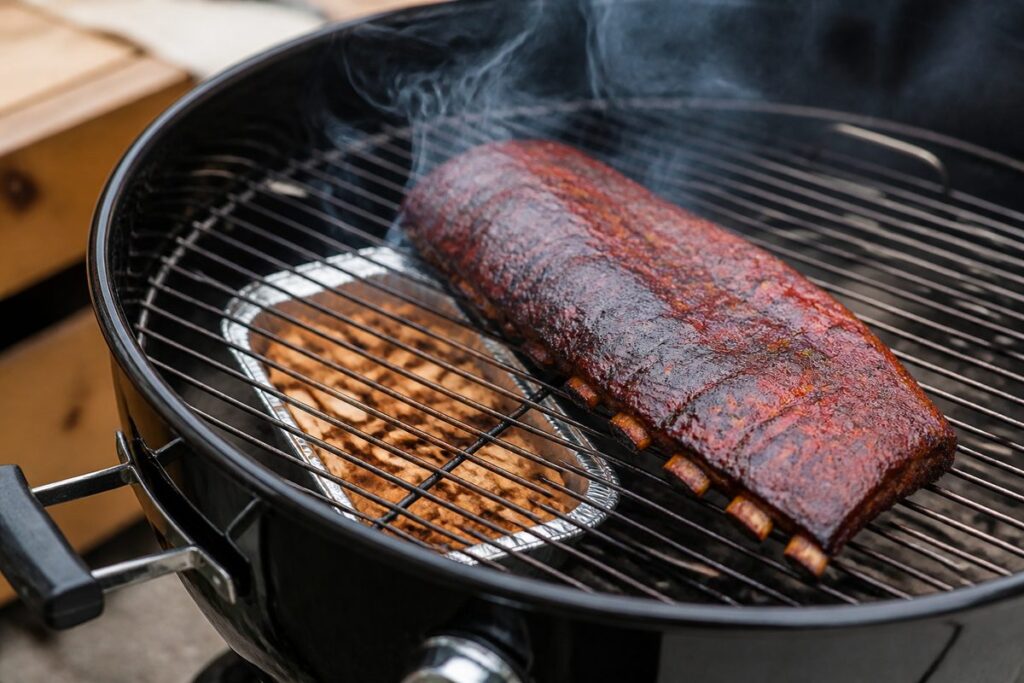
You don’t need to buy a dedicated smoker to put real wood smoke into your food. The grill you already own — a charcoal kettle, a gas barbecue, even your kitchen oven with a little help — can produce genuinely smoky, satisfying results. For Singapore cooks short on space or budget, working in an HDB or condo where a big offset pit is out of the question, this is the most practical way to start. The flavour will usually be a touch milder than a purpose-built smoker delivers, but it is real smoke, and it is a brilliant way to learn the craft before committing to dedicated kit.
What you’re really trying to recreate
A smoker does three things: it holds a low, steady temperature; it cooks food with indirect heat so it roasts rather than chars; and it surrounds the food with clean wood smoke. Any setup that delivers those three — low temperature, indirect heat and a smouldering wood source — will smoke food. Once you understand it that way, the kettle, the gas grill and the oven are just different routes to the same destination. The rest is fuel management and patience.
The charcoal kettle method
A kettle grill is the most capable improvised smoker, because charcoal gives both the heat and, with added wood, the smoke. The key is a two-zone fire: bank your lit coals to one side, and place the food on the cool side away from the flame, so it cooks by indirect heat. Add wood chunks directly onto the coals for smoke, and control the temperature with the top and bottom vents — more air for hotter, less to bring it down. Aim for a steady 110–135°C for most cooks. A “snake” or “minion” arrangement of unlit coals, lit at one end, can hold low heat for hours with minimal fussing. For the full setup, see our kettle smoking guide.
The gas grill method
A gas grill is the most convenient option and the easiest to hold at a steady temperature, but it needs help to make smoke since the burners produce none. Light only one or two burners and put the food over the unlit side for indirect heat. To generate smoke, use a smoker box — a small metal box of wood chips set over a lit burner — or a pellet tube packed with wood pellets and lit at one end. Keep the lid down to trap the smoke, run on the lowest stable setting that holds your target temperature, and top up chips or pellets as they burn through. Our gas grill smoke guide walks through the details.
The oven plus smoke method
When weather, fire rules or balcony restrictions make outdoor cooking impossible — a real consideration in many Singapore blocks — the oven can stand in for the low-and-slow heat while a separate step adds smoke. Cook the food gently in the oven at a low temperature to get tender, evenly cooked results, and add smoke flavour with a cold-smoke step using a pellet tube or smoking gun before or after, or by including a smoked ingredient such as smoked salt or paprika. It is the mildest of the three approaches, but it is reliable, fully indoors-friendly, and keeps you within building rules.
Wood, temperature and food safety
Whatever the setup, the principles are the same. Use wood chunks for charcoal and chips or pellets for gas, matching the wood to the food — mild fruit woods for poultry, fish and vegetables; oak or hickory for beef and pork. You are after thin, blue, clean-burning smoke, not thick white billows, which taste acrid. Keep temperatures low and steady, and above all cook to internal temperature, not time or appearance — a probe thermometer is the one piece of kit worth buying first, because hitting safe, correct doneness matters far more than the vessel you used.
Singapore-specific considerations
Before you light anything, check what you are allowed to do where you live. Many HDB and condo blocks restrict open charcoal fires on balconies and in common areas; town council and SCDF fire-safety rules, ventilation and your neighbours all matter. Gas and electric setups are generally more acceptable in tight residential spaces than open charcoal, and the oven method sidesteps the issue entirely. The hot, humid climate also burns through fuel faster and rusts equipment quickly, so store charcoal and wood somewhere dry. When in doubt, the indoor oven-plus-smoke route is the safest bet.
Common mistakes
- Using direct heat. Putting food over the flame chars and dries it. Always set up two zones and cook indirect.
- Too much smoke. Thick white smoke tastes bitter. Aim for thin, clean, blue smoke.
- Chasing the clock. Improvised setups run unevenly; cook to internal temperature with a probe.
- Lid-lifting. Every peek lets out heat and smoke and lengthens the cook. Trust your thermometer instead.
- Ignoring the rules. Lighting charcoal where it isn’t allowed risks fines and fire hazards. Check first.
FAQ
Is it as good as a real smoker? The flavour is milder, but it is genuinely smoky and a great way to start. Many people cook this way for years before buying dedicated kit.
Which method should a beginner pick? A charcoal kettle gives the most authentic results; a gas grill is the easiest to control; the oven is the most space- and rule-friendly. Choose by what you own and where you live.
Do I need to soak wood chips? No — soaking mostly produces steam and delays smoke. Use dry chips or chunks for cleaner smoke.
When is it worth upgrading? Once you are smoking regularly and want more capacity, easier temperature control and stronger flavour. Browse grills & smokers or request a quote for a setup suited to your space.