
Guide
How to Grill the Perfect Steak
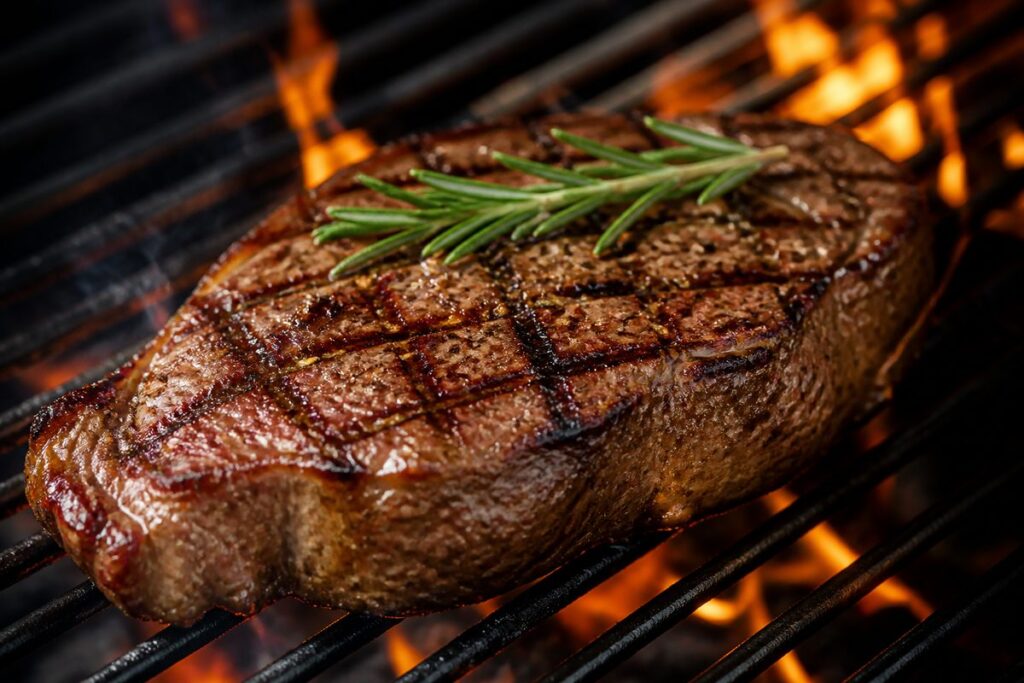
A perfectly grilled steak has a deep, dark crust and your exact target doneness from edge to edge — no grey band, no cold middle. Getting there isn’t luck. It comes down to three controllable things: a dry surface, real heat for the crust, and cooking to an internal temperature rather than guessing by the clock. Here’s the full method, plus how to handle Singapore’s humidity and where to source a proper steak.
Choosing the cut
For grilling, thickness matters more than the name on the label. A steak at least 3cm thick gives you room to build a crust without overcooking the centre; anything thinner cooks through before it browns. Ribeye is the forgiving choice — its intramuscular fat bastes the meat and stays juicy even if you overshoot slightly. Striploin (sirloin) is leaner with a firmer bite, and tenderloin (fillet) is the most tender but the mildest in flavour and the easiest to dry out.
In Singapore you’ll find good steaks at wet-market beef stalls, butchers, and the chilled cabinets of larger supermarkets — look for grain-fed or grass-fed cuts and ask for them cut thick rather than buying pre-sliced thin steaks. Chilled beats frozen-and-thawed for surface dryness, which matters for the crust.
Dry and season
Water is the enemy of browning — a wet surface spends its energy boiling off moisture instead of forming a crust. Pat the steak thoroughly dry with paper towel. Better still, salt it generously and leave it uncovered on a rack in the fridge for a few hours to overnight; the salt seasons deep and the surface dries out for a far better sear. In Singapore’s humidity, this fridge air-dry makes a noticeable difference.
Season simply: coarse salt and freshly cracked black pepper are all a good steak needs. The browning you’re chasing is the Maillard reaction — the cascade of flavour compounds that forms when a dry, protein-rich surface hits high heat. Bring the steak close to room temperature before it goes on the grill so the centre isn’t fridge-cold.
Sear hot, or reverse-sear thick cuts
For steaks up to about 3cm, go straight over high direct heat: get the grill grates ripping hot, lay the steak down, and don’t move it until it releases cleanly and has a crust. Flip and repeat. Flipping every 30–60 seconds is fine and actually cooks more evenly than the one-flip rule.
For thick cuts (4cm and up), reverse-sear gives the most even result. Cook the steak gently over indirect heat — or in a smoker around 110–120°C — until the internal temperature is about 10–15°C below your target, then finish with a fierce, short sear over direct heat to build the crust. The slow first stage means almost no grey band and effortless edge-to-edge doneness.
Temperature and timing
Cook to temperature, not time. Use an instant-read probe in the thickest part, away from bone or fat. Crucially, pull the steak early — carryover cooking will raise the internal temperature by roughly 3–5°C as it rests, more on a thick reverse-seared cut. Target probe temperatures, pulling at the lower number:
- Rare: pull at 48–50°C (finishes ~52°C)
- Medium-rare: pull at 52–54°C (finishes ~57°C) — the sweet spot for ribeye and striploin
- Medium: pull at 57–59°C (finishes ~63°C)
- Medium-well: pull at 63–65°C
If you’re cooking several steaks or running a reverse-sear alongside other dishes, our smoking time estimator helps you plan the timing.
Step by step
- Salt and air-dry the steak in the fridge; bring it toward room temperature before cooking.
- Pat dry again and add pepper.
- For thin steaks, sear over high direct heat, flipping until a crust forms and the probe hits your pull temperature.
- For thick steaks, cook indirect to ~10–15°C below target, then sear hard to finish.
- Pull early, rest, then slice against the grain.
Rest and serve
Resting lets the muscle fibres relax and reabsorb juices that would otherwise run out onto the board. Rest a steak loosely tented for about half its cooking time — five to ten minutes for most steaks. Slice against the grain to shorten the muscle fibres and improve tenderness, and finish with flaky salt.
Common mistakes
- Cooking from a wet, fridge-cold surface — you’ll steam, not sear, and the middle lags behind.
- Grill not hot enough — a lukewarm grate gives a pale, leathery crust.
- Guessing doneness by feel or time — use a probe; cuts vary too much to time reliably.
- Forgetting carryover — pull early or you’ll overshoot during the rest.
- Slicing immediately — the juices end up on the board instead of in the meat.
FAQ
What’s the best doneness for steak? For ribeye and striploin, medium-rare (pull around 52–54°C) balances tenderness, juiciness and rendered fat. Leaner cuts like fillet are also best around medium-rare.
Do I need to oil the steak or the grill? Lightly oil the steak, not the grate — oiling the grate just creates flare-ups. A dry, well-seasoned surface browns best.
How do I stop flare-ups? Keep a cooler zone on the grill to move the steak to if fat drips ignite, and trim excessive surface fat. Flames coat the meat in soot, not flavour.
Can I grill steak on a condo balcony? Check your town council and SCDF rules — some blocks restrict open charcoal fires. A gas grill or electric grill is often the compliant choice; keep well clear of railings and combustibles.
Where do I buy a grill? Browse our grills or request a quote.